Page 1 of 4
3 November 2026
Serbia’s democratic breakthrough: time to turn an open, pro-European and leaderless movement into democratic government

Serbia has achieved an electoral breakthrough, but democratic renewal has only begun. The challenge for the Student List is now to turn a broad, leaderless movement into effective democratic government without losing the openness that made its victory possible.
16 October 2026
Beyond the Polls: What Bulgaria’s Election Means for Europe I by Elena Kuzmova

Next week’s presidential election in Bulgaria comes at a moment when the country’s European and geopolitical direction is increasingly under scrutiny. Beyond the polls and personalities, the vote will help determine whether Bulgaria strengthens its role within the EU and NATO or continues its recent drift towards a more accommodating position on Russia.
7 October 2026
Liberal Reads: Can Liberal Democracy Be Rebuilt? I By Gérard Pogorel

A review of Daron Acemoglu’s What Happened to Liberal Democracy? Remaking a Politics of Shared Prosperity (2026) by Gérard Pogorel, Professor of Economics-Emeritus, ELF Senior Fellow
21 September 2026
Owning Europe’s Future Starts with Our Children

The motto of the European Liberal Forum is own the future. But we can’t own the future if liberals fail children in Europe: In 2024, about 24.2% of children (19.5 million) in the EU faced the risk of poverty or social exclusion.
16 September 2026
Sweden’s Political Centre Is Back in the Game I by Matilde Molander

Both Swedish liberal parties, Centerpartiet and Liberalerna, achieved much better election results than previously expected. But they have chosen not only different sides in the political arena, but also completely different electoral strategies.
28 July 2026
The EU Electrification Action Plan only gets the first half of the equation right I by Eloi Borgne

What to think of the Commission’s Action Plan? First of all, it’s good that it’s finally there. A plan that tackles the price, tax and infrastructure barriers head-on is a necessary and overdue step. However, there are some limitations to the plan.
4 June 2026
Why Liberals Must Reclaim the Gender Debate

The challenge in front of us is to rebuild the social foundations that allow people to trust one another, form relationships, and find a path for a shared future together.
19 May 2026
Three Regulations to Transform European Rail Travel
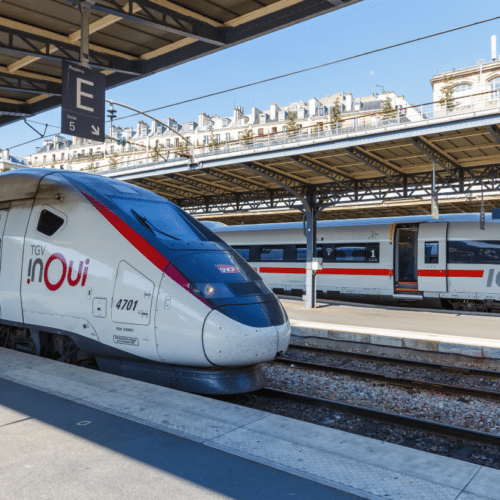
The European Commission has published three interconnected proposals that aim to enable Europeans to book and travel by train more easily. These regulations tackle fragmentation in the railway market whilst promoting competition and sustainability. Together, they represent a distinctly liberal approach: removing barriers, empowering consumers, and tackling market gatekeeping.
8 September 2025
Pillars of Strategic Autonomy: Where Does the EU Stand in the Global Race for Resources?

Acute geopolitical tensions are reshaping the very foundations of international relations and trade, often turning critical resources into weapons of global power play.
2 September 2025
Beyond Bureaucracy, Towards a Better Life: A Liberal Cohesion Policy for Europe’s Future
The European Union’s cohesion policy is arguably one of the most effective development policies in history For decades, it has served as a redistributive mechanism, building roads, digital networks, and public services across less-developed regions. But in an era of geopolitical tension, climate urgency, and technological disruption, a growing number of liberals argue that this approach is no longer enough.
30 July 2025
Daring to Demand a Better Budget: Liberals Can Reshape Europe’s Farming Future

The proposed reform of the Common Agricultural Policy marks a major shift, giving national governments more control while cutting red tape and merging funding streams. While it includes welcome steps like a “starter pack” for young farmers, the removal of climate ringfencing and continued reliance on outdated land-based subsidies risk undermining sustainability and innovation.
29 July 2025
The new MFF: Time for Bold Choices?

While acknowledging crucial strategic areas, the current MFF proposal remains rather conservative and might be cut back further. The proposal is still far off from future-proofing the European budget. Institutionalising proposals such as a Future Share concept to safeguard future-oriented investments would ensure Europe’s strategic autonomy, global competitiveness, and long-term resilience. Otherwise, even ambitious visions might become lost in translation.
Page 1 of 4