7 October 2026
A review of Daron Acemoglu’s What Happened to Liberal Democracy? Remaking a Politics of Shared Prosperity (2026) by Gérard Pogorel, Professor of Economics-Emeritus, ELF Senior Fellow
A review of Daron Acemoglu’s What Happened to Liberal Democracy? Remaking a Politics of Shared Prosperity (2026)
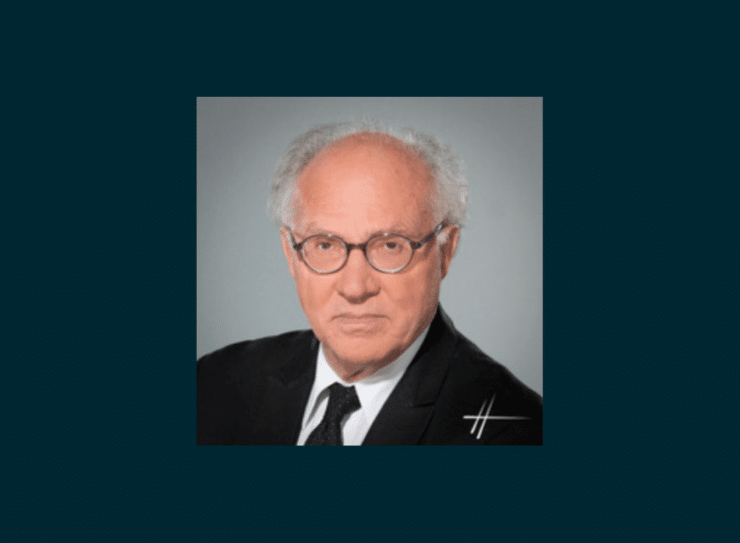
By Gérard Pogorel, Professor of Economics-Emeritus, ELF Senior Fellow
Daron Acemoglu offers an ambitious account of liberalism’s crisis and a forceful case for renewing it. Treating liberalism not merely as a commitment to markets but as a political and social project grounded in individual freedom, democratic government, progress, open inquiry, and concern for the “working class,” he asks how it might deliver shared prosperity and, once again, command popular support.
The book’s central proposal is a working-class liberalism—or, we would say, a popular liberalism. Acemoglu presents it as an answer to the rise of populist and anti-liberal movements that have won over a substantial share of working-class voters across continents. His starting point is stark: many citizens now believe that liberal democracy has failed to deliver shared prosperity, political participation, and security amid economic change.
Acemoglu locates a central cause of the crisis in the emergence of post-industrial society, a concept associated with Alain Touraine and Daniel Bell and profoundly reshaped by digital technology. The relative decline of manufacturing and the expansion of health care, education, public administration, and services have increased the political and cultural weight of university graduates. In his account, these elites have gradually become detached from the concerns of less-educated citizens and have neglected several core liberal principles: self-government, respect for plural values, rooted communities, and shared prosperity.
However, the actual chronology complicates this explanation. The features of post-industrial society were already emerging in the early 1970s, whereas widespread disaffection with liberal democracy became especially visible only from the 2000s onward. That generational lag calls for a clearer account of how productive transformation, globalisation, the digital revolution, and changing political identities interact. The economic effects of globalisation have also varied across countries: some working-class groups experienced downward mobility and greater insecurity, but workers’ incomes continued to rise in several economies. The perception of losing control has sometimes mattered as much as measurable changes in purchasing power.
Acemoglu recalls the extraordinary gains in well-being achieved over the past half century in a broadly liberalised environment, including the escape of hundreds of millions of people from poverty. Yet from the 2000s onward, income growth slowed or stopped at the bottom while continuing at the top. Objective inequality has been compounded by a sense of dispossession: the future appears more uncertain, career paths less predictable, and economic decisions increasingly remote from ordinary citizens.
Aversion to uncertainty, in turn, encourages retreat. Neither voters nor political leaders are satisfied by ritual appeals to innovation; they often prefer illusory certainties to policies that acknowledge risks and unknowns. At the same time, debates over immigration, feminism, and minorities have alienated from liberalism groups more concerned with wages, purchasing power, and social stability. Credible liberal politics must absolutely hold individual rights and material expectations together rather than sacrifice one for the other.
Acemoglu’s response rests on three pillars. The first is shared prosperity: the gains from productivity and technological progress must benefit society as a whole. The second is self-government, especially at the local level, which restores communities’ capacity to make decisions and renews democratic legitimacy. The third is a sufficiently ambitious policy of redistribution and social investment to make occupational transitions more secure.
This agenda would require an alliance of moderates, an increasingly difficult prospect in a polarised political landscape. Importantly, liberals are not alone in this fight, as liberalism’s influence extends beyond parties that explicitly claim the label. European social democrats, parts of Christian Democrats, and “inclusive” Conservatives all absorbed liberal principles. In practice, liberalism has often shaped the institutions and programs of other political traditions more profoundly than it has governed in its own name, restoring this broader doctrinal reach, well beyond a narrow concern with supply, demand, and free trade.
Implementing this programme, however, faces a major constraint: local decisions are embedded in global economic, technological, and financial chains. Self-government may therefore remain merely defensive unless national and European capabilities support it. Redistribution, already significant today, is likewise insufficient on its own. The most convincing path would be to widely expand arrangements akin to Danish “flexicurity,” committing substantial resources to lifelong learning, skills adaptation, and collective support through technological change.
Such a strategy, nevertheless, depends on industrial and technological judgments that no one can make with confidence. Who could have predicted that the Netherlands would become home to the world’s quasi-monopoly in advanced lithography machines, or that Taiwan would emerge as the dominant centre of the world’s most sophisticated semiconductor manufacturing? Catch-up efforts in China, Japan, Malaysia, Europe and the US demonstrate how difficult it is to build such positions deliberately. Popular liberalism must therefore combine protection against risk with experimentation and openness to the unforeseen.
What Happened to Liberal Democracy? is a brilliant, heartening, wide-ranging, and engaging defence of liberalism in its economic, social, political, scientific, and cultural dimensions. It is especially welcome that an economist, and a Nobel laureate at that, extends liberalism far beyond the market economy alone. The book powerfully argues that liberal democracy can recover its vitality only by rebuilding a sense of community and restoring citizens’ agency over their future.
The historical diagnosis and the ideal of shared prosperity are persuasive, but the remedies clearly need further political elaboration to fully address the obstacles liberalism faces in practical economics and politics. More practical ideas are required to address the relationship between local government and global interdependence, the ability to create efficient industrial policies, and the ways to unite moderates.
In short, Acemoglu is wholly convincing that liberalism must become popular again; to do so, however, will require a combination of political acumen and shrewd industrial strategies. One more effort from us all, one might say, is needed to turn this remarkable diagnosis into a political strategy.