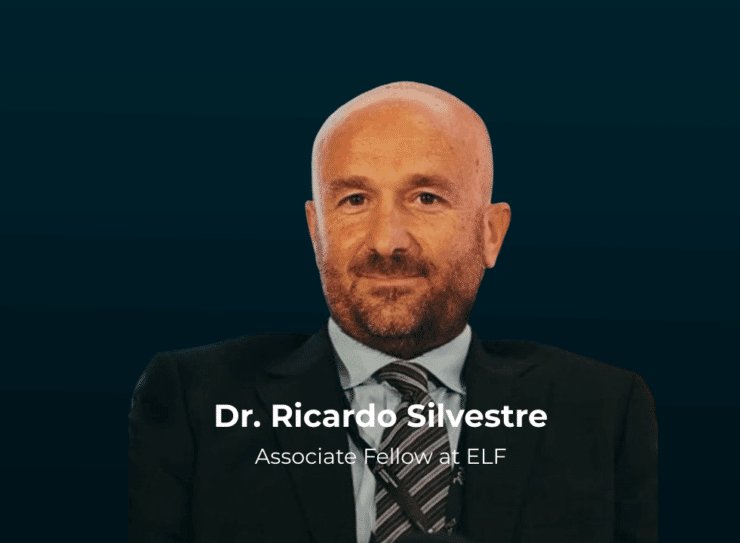
By Ricardo Silvestre, Associate Fellow of ELF

When attending the Black Sea Security Conference in Tbilisi in October 2024, a joint event led by the liberal Friedrich Naumann Foundation with the support of ELF, some ominous shadows loomed large. Georgians were less than a month away from the parliamentary election, facing justified fears, now materialized, of what a victory for the Georgian Dream party could mean for the country.  Since then we observed an extensive campaign of repression, with politically motivated prosecutions of opposition leaders. The dismantling of independent media and civil society through restrictive laws, and the capricious detentions and disproportionate measures to face protesters, that continue to hit the streets now a year after the 2024 October election. 
Voices of Resistance in Georgian Media

This sense of concern deepened during a visit to the studios of Radio Free Europe/Radio Liberty and its Georgian service Tavisupleba (meaning Freedom in Georgian), where journalists strive to maintain political and financial independence. Conversations with those in charge made it clear that their worries stemmed not only from local pressure, but also from the approaching U.S. elections in November. Leaving Tbilisi, there was a persistent feeling of anguish. These were people giving everything they had, facing repression, the imprisonment of colleagues, and a permanent risk of being shut down by authoritarian pressure. They could soon find themselves unsupported and exposed.

The Global Consequences of U.S. Disengagement

Since then, the situation has further deteriorated. The Trump Administration’s full-frontal attack on Voice of America, Radio Free Europe/Radio Liberty, and other outlets worldwide has been well documented. As Anne Applebaum noted in a recent piece for The Atlantic, the United States, once again through the White House, has retreated from its leadership role in promoting democracy, freedom, and liberal values. This disengagement has created space for countries such as Russia and China to spread propaganda across Asia, Africa, and South America.

Why Europe Must Step In

This is precisely where the European Union (EU) must, again, step in, assuming the mantle of a beacon of values, inclusion, and hope for a better future. The EU should launch a Manhattan Project-style initiative to finance and build infrastructure, from human resources and technical facilities to digital hubs and multilingual platforms.  Specifically, this means creating a network of independent regional offices (like the historic RFE/RL headquarters in Prague) to provide surrogate news in key strategic languages (e.g., Russian, Mandarin, Farsi, and local languages in the Western Balkans and Caucasus).

Building a Modern Infrastructure for Free Information

This project must also invest in crucial technical assets: resilient shortwave and satellite broadcasting capacity to bypass state-level internet censorship and jamming, and secure digital platforms (VPNs, darknets) to guarantee safe access to information for citizens under authoritarian rule. It should also recruit professionals already in the field, including the US citizens that made Europe their home and who possess the experience and know-how to make the project effective. A strong branding effort should accompany this initiative, using already running similar plans, presenting it as a European voice defending pluralism, human rights, individual and collective freedoms, the rule of law, and liberal democracy.

There have been some piecemeal responses to U.S. cuts. Germany, the Nordic and Baltic countries, and the Czech Republic have pushed the EU to fund RFE/RL to fill the gap. The Czech Minister for European Affairs, Martin Dvořák, and Belgian Foreign Minister Maxime Prevot have publicly stressed the importance of supporting independent media where democracy and free press are under threat. Yet there has been no meaningful effort to counter the systematic dismantling of the U.S.-led post-Cold War information project, which operates in 23 countries and 27 languages across Central and Eastern Europe, the Near East, and Central Asia.

A Call for Bold European Leadership

The European Parliament and Commission must lead politically and mobilise the necessary resources to create this lifeline for our friends under duress, in places like Georgia and Belarus,, or further away neighbours like in Iran or Afghanistan, where information is suppressed or conditioned, and the only narratives available are from authoritarians. This will help present Europe to the world as a guardian of freedom of information in the 21st century, while strengthening the EU’s ethos: a project committed to liberal values and ideas like freedom of speech, political representation, economic freedom, rule of law, individual freedom and social progress.

whois: Andy White Freelance WordPress Developer London