Page 1 of 2
6 October 2025
Western Balkans as a Key Strategic Partner in Shaping European Security
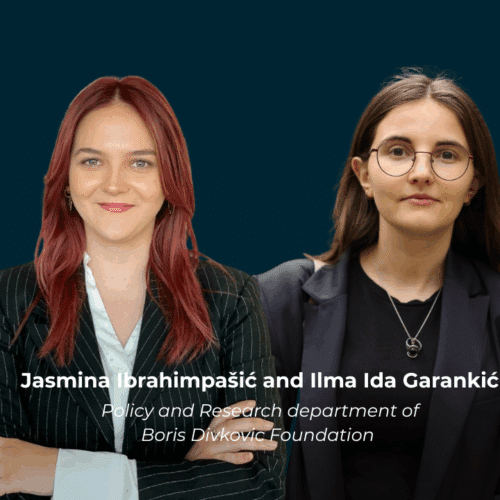
With the war in Ukraine, drones flying into NATO territory and ongoing protests in Serbia – just to mention a few relevant examples – we can say that Europe’s security, democracy, and stability are at stake. One of the key panels at the “Rethinking Security on Europe’s Eastern Frontier” conference this year addressed Europe’s security and stability and explored the role that the Western Balkans could play in strengthening the European security architecture.
1 October 2025
Moldova belongs in the EU – the election result shows it

On the 28th of September 2025, Moldovans went to the polls in what many regarded as one of the most consequential parliamentary elections in the country’s young democracy. Against a backdrop of regional uncertainty, foreign interference, and mounting socio-economic pressures, this election was about where Moldova belongs: in the EU, or stuck in Russia’s shadow.
21 August 2025
European Strategic Autonomy: Looking Up to the Heavens

During the post–Cold War period, space was mainly seen as a domain of discovery and innovation. Scientific ingenuity and ambition thrived within this global commons, leading to vital civilian services such as GPS, earth observation, and satellite systems that connected the world and deepened awareness of our planet’s environmental pressures. It was also an era of relative restraint, shaped by a culture of collaboration and a commitment to the peaceful use of space born out of the trauma of the 1960s space crisis. Organisations like the UN Office for Outer Space Affairs helped institutionalise these norms, while the Outer Space Treaty famously stated that space exploration ‘shall be carried out for the benefit and in the interests of all countries’. For liberals, this cooperative order embodied a core conviction: that progress is greatest when the knowledge and infrastructure of space are treated as public goods, open and accessible to all.
17 July 2025
Safeguarding EU sovereignty: challenging Trump’s coercive tariffs
Why are some of the European Union (EU) institutions holding back on robust pushback against an increasingly erratic, authoritarian, and bullying White House? Are we going to stand by while the Trump administration interferes with the EU’s sovereign choices through trade and investment measures, simply because the European Commission refuses to bend Single Market rules for US-based digital platforms, to the frustration of America’s tech oligarchs?
2 July 2025
To the Space Act and Beyond: How the EU can shift from space funder to space power

The 21st century will be the century of space. This grand claim, recently echoed by Commissioner Kubilius in remarks on the European Space Act (ESA) and the EU’s new Vision for the Space Economy, is not mere rhetoric. The global space sector is projected to grow exponentially, with the Draghi report suggesting it could surpass €1.5 trillion by 2035 (from €500 billion in 2023), reshaping not just defence and telecommunications, but climate monitoring, precision agriculture, finance, and mobility. Accordingly, space is no longer just a frontier of exploration, but an economic engine and critical infrastructure layer central to modern civilisation.
1 July 2025
Bridging the Gap: The Case for Political Engagement in Complex Environments and the Merits of Staged Integration

When EU officials travel to countries with politically sensitive contexts such as Serbia and Georgia, these are not mere ceremonial gestures. Rather, these official visits are essential for grasping the realities on the ground.
23 June 2025
Choosing Freedom: How European Consumers Can Stand Against Russian Aggression
The brutal war unleashed by Russia against Ukraine is not just a distant geopolitical event; it impacts our everyday choices here in Europe. Each time we purchase products from companies still operating in Russia, we unknowingly support helpers of a regime responsible for devastating human suffering. This reality presents a difficult but essential question: Can European consumers really make a difference?
4 June 2025
Poland: Divided country, divided society

Over 10 million Poles woke up on Monday morning, June 2 and faced the news that Karol Nawrocki won the presidential election.
21 May 2025
Armenia’s EU integration: a strategic pivot amid global geopolitical shifts
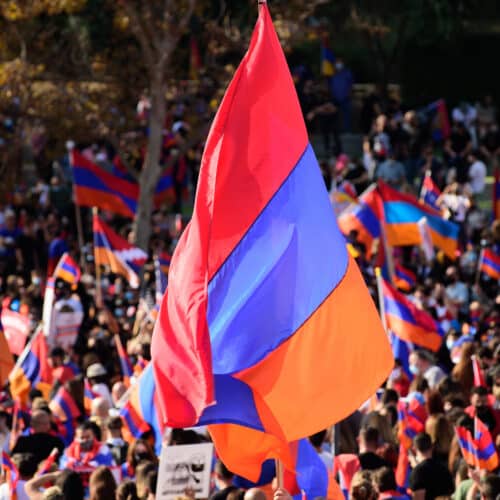
In 2024, Armenia’s foreign policy underwent a significant transformation. What was once a cautious balancing act between Russia and the West is now evolving into a decisive shift towards European integration. This change is driven by a combination of internal aspirations and external pressures, marking a new chapter in Armenia’s geopolitical journey.
19 May 2025
All quiet on the climate front

In 2024, the world faced an unprecedented wave of natural disasters, from tropical cyclones to severe droughts, leading to the highest number of displacements in 16 years. These events not only exacerbated food crises but also inflicted massive economic losses. Now, more than ever, investing in clean energy, water, and climate services is crucial to overcoming these challenges and fostering resilient communities.
Page 1 of 2