Page 1 of 7
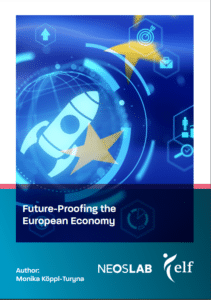
Future-Proofing the European Economy
Publication argues that a future-proof European economy rests on three pillars: a fully functioning Single Market, stronger competitiveness driven by innovation and cost efficiency, and open economic sovereignty
- Type: ELF Papers, Publication,
- Year: 2026
- Language: English,
- Member: NEOS Lab,
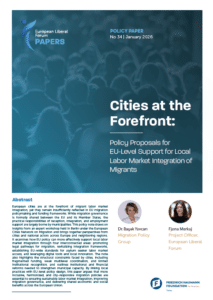
Cities at the Forefront: Policy Proposals for EU-Level Support for Local Labor Market Integration of Migrants
The publication argues that Europe’s economic and industrial resilience is increasingly threatened by overreliance on external suppliers, particularly in strategic sectors critical to the green and digital transitions.
- Type: ELF Papers, Publication,
- Year: 2026
- Language: English,

Same Sex Marriage: From Fragmented Progress to a Shared European Commitment to Equality
Publication explores the evolving legal, political, and social landscape of marriage equality across Europe.
- Type: ELF Papers, Publication,
- Year: 2026
- Language: English,
- Member: Center For Liberal Studies,
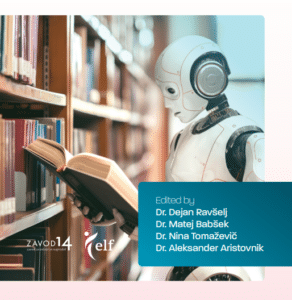
Reprogramming Europe’s Higher Education
This publication examines how AI can enhance creativity, critical thinking, and problem-solving in higher education, empowering students and educators to adapt to rapid technological change.
- Type: ELF Papers, Publication,
- Year: 2025
- Language: English,
- Member: Zavod14,
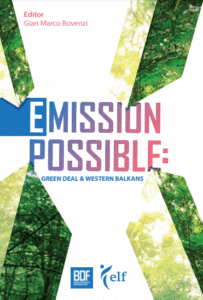
(E)mission Possible: Green Deal & Western Balkans
This publication offers a clear and structured overview of the Western Balkans’ progress on their path toward environmental sustainability and alignment with the European Green Deal.
- Type: ELF Papers, Publication,
- Year: 2025
- Language: English,
- Member: Boris Divkovic Foundation,
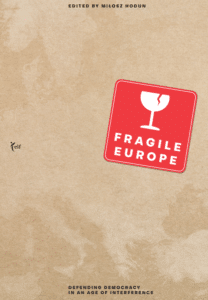
Fragile Europe – Defending Democracy in an Age of Interference
Publication frames Europe’s fragility as an awareness of what can be lost, and therefore, what must urgently be defended.
- Type: ELF Papers, Publication,
- Year: 2025
- Language: English,
- Member: Projekt:Polska,
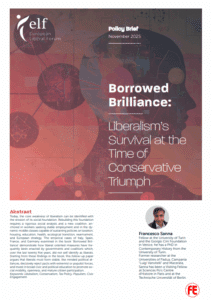
Borrowed Brilliance: Liberalism’s Survival at the Time of Conservative Triumph
The paper argues that liberalism’s survival depends on rebuilding a broad social coalition anchored in workers seeking stability and a dynamic middle class and forming stable alliances with genuinely democratic partners while rejecting agreements with extremist forces.
- Type: ELF Papers, Publication,
- Year: 2025
- Language: English,
- Member: Fondazione Luigi Einaudi,
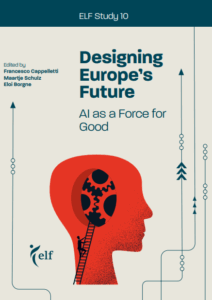
Designing Europe’s Future: AI as a Force of Good
AI is not just a technological tool; it is a transformative force that can make our societies more prosperous, sustainable, and free – if we dare to embrace it.
- Type: ELF Papers, Publication,
- Year: 2025
- Language: English,
- Member: ELF Secretariat,
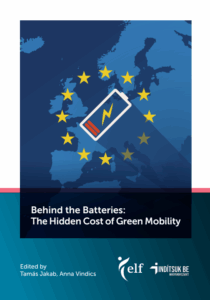
Behind the Batteries: Hidden Costs of Green Mobility
This publication examines the true costs and complexities behind Europe’s shift to electric mobility. It explains how batteries bring not only technological and economic opportunities but also environmental, social, and geopolitical challenges.
- Type: ELF Papers, Publication,
- Year: 2025
- Language: English,
- Member: Indítsuk Be Magyarországot Foundation,
Statement – Young Leaders’ Meeting 2025 A Vision for a Sovereign and Resilient Europe
This statement outlines young liberal leaders’ position on strengthening European strategic autonomy through empowering youth and local action.
- Type: ELF Papers, Publication,
- Year: 2025
- Language: English,
- Member: LYMEC,
Building Freedom: Liberal Solutions to Europe’s Housing Crisis
The study examines the historical and philosophical foundations of property as a cornerstone of liberty, the forces that have restricted access to home ownership, and the broader consequences for European society. It argues that restoring property ownership to its rightful place is essential for the future of liberal societies in Europe.
- Type: ELF Papers, Publication,
- Year: 2025
- Language: English,
- Member: ELF Secretariat,
A Pension System for Our Common Future
The paper presents the advantages of capitalised systems and outlines actionable policy recommendations to build a more resilient, investment-driven pension model for the EU.
- Type: ELF Papers, Publication,
- Year: 2025
- Language: English,
- Member: Center For Liberal Studies,
Page 1 of 7