Page 1 of 16
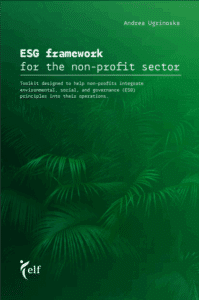
ESG Framework for non-profit Sector
This toolkit is designed to help non-profits integrate environmental, social, and governance (ESG) principles into their operations. While businesses are increasingly mandated to adopt ESG strategies, non-profits have a unique opportunity to drive change—not just by advocating for sustainable policies, but by embedding these principlesin their own daily practices.
- Type: ELF Papers, Policy Paper, Publication,
- Year: 2024
- Language: English,
- Member: ELF Secretariat,
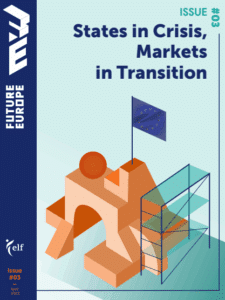
[FEU Journal 3] States in Crisis Markets in Transition
The third issue of the Future Europe Journal is dedicated to exploring how Europe has been transitioning to new modes of functioning due to its multifaceted crisis management. In their contributions, our authors reflect on two interrelated dynamics. On the one hand, the papers study how the European markets and industries adapted to new challenges and demands. On the other hand, the authors focus on innovative instruments and practices that policymakers could utilise to navigate crises and out-of-the-ordinary scenarios on the EU level. Both angles shed light on the long-term transformations and trajectories to which the European states, markets, and the Union as a whole are heading.
- Type: Future Europe Journal, Publication,
- Year: 2023
- Language: English,
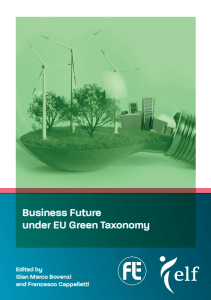
Business Future under EU Green Taxonomy
This publication aims at being a stimulus for a debate on the role of gas in the European Taxonomy and on energy transition policies.
- Type: Publication,
- Year: 2022
- Language: English,
- Member: Fondazione Luigi Einaudi,
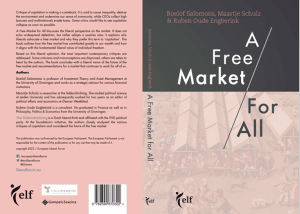
A Free Market for All
With the support of ELF the Dutch book ‘Een markt voor ons allemaal’ has been translated into an English version, ‘A Free Market For All’. The book explains why free market solutions are superior to state planning and state
monopolies.
- Type: Publication,
- Year: 2022
- Language: English,
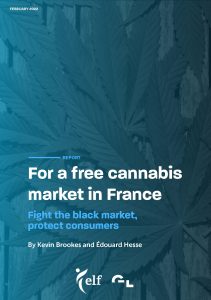
For a free cannabis market in France: Fight the black market, protect consumers
Europe has all the cards in hand to be at the forefront of drug policy reform and show the rest of the world that another path is possible. Courage and method are all we now need.
- Type: Publication,
- Year: 2022
- Language: English,
![[Discussion Paper] Direct Foreign Investments in Europe by Luciano Vasques](https://liberalforum.eu/wp-content/uploads/2022/03/Discussion-Paper-Direct-Foreign-Investments-in-Europe-212x300.jpg)
Direct Foreign Investments in Europe
Discussion Paper
- Type: Publication,
- Year: 2022
- Language: English,
- Member: LibMov,
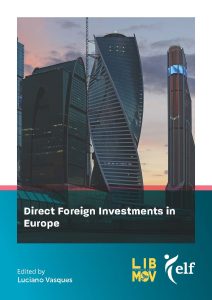
Direct Foreign Investments in Europe
With this work we intend to undertake some considerations regarding the regulatory procedures of foreign direct investments (“FDI”) within the European Union.
- Type: Publication,
- Year: 2022
- Language: English,
- Member: LibMov,
![[Policy Paper 12] Why Europe Should Stand Up for Taiwan by Werner Somers, PhD](https://liberalforum.eu/wp-content/uploads/2022/03/Policy-Paper-12-Why-Europe-Should-Stand-Up-for-Taiwan-212x300.jpg)
[Policy Paper 12] Why Europe Should Stand Up for Taiwan
The growing tensions between China and Taiwan coincide with the relationship between the US and the PRC reaching a new low.
- Type: Policy Paper,
- Year: 2022
- Language: English,
- Member: ELF Secretariat,
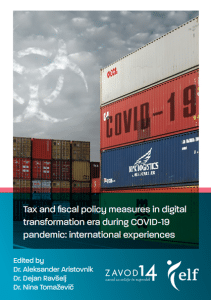
Tax and fiscal policy measures in digital transformation era during COVID-19 pandemic: international experiences
This publication provides case studies by country, on the ongoing issues related to tax and fiscal policy measures in digital transformation era during the COVID-19 pandemic.
- Type: Publication,
- Year: 2022
- Language: English,
- Member: Zavod14,
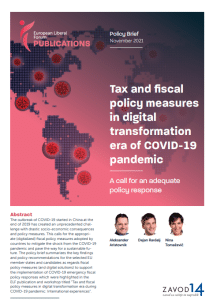
Tax and fiscal policy measures in digital transformation era during COVID-19 pandemic: A call for an adequate policy response
The policy brief summarizes the key findings and policy recommendations for the selected EU member states and candidates as regards fiscal policy measures.
- Type: Publication,
- Year: 2022
- Language: English,
- Member: Zavod14,
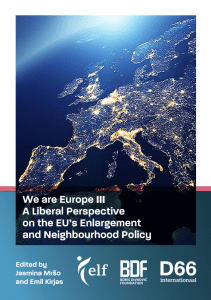
We are Europe III: A Liberal Perspective on the EU’s Enlargement and Neighbourhood Policy
Although European Commission has made several geopolitical attempts to accelerate the developments in the Western Balkans and Eastern Neighbourhood have, there has not been any significant progress on the ground.
- Type: Publication,
- Year: 2022
- Language: English,
- Member: Boris Divkovic Foundation, ELF Secretariat,
![[Policy Paper 11] Flexible Transnational Electoral Constituencies by [Policy Paper 11] Flexible Transnational Electoral Constituencies by Francesco Grillo, PhD and Raffaella Nanetti](https://liberalforum.eu/wp-content/uploads/2022/03/Policy-Paper-11-Flexible-Transnational-Electoral-Constituencies-212x300.jpg)
[Policy Paper 11] Flexible Transnational Electoral Constituencies
The tragic events that are shaking the world require Europeans to think of the Union’s politics as a whole, in which the common destiny of the Member States can be decided together.
- Type: Policy Paper,
- Year: 2022
- Language: English,
Page 1 of 16